
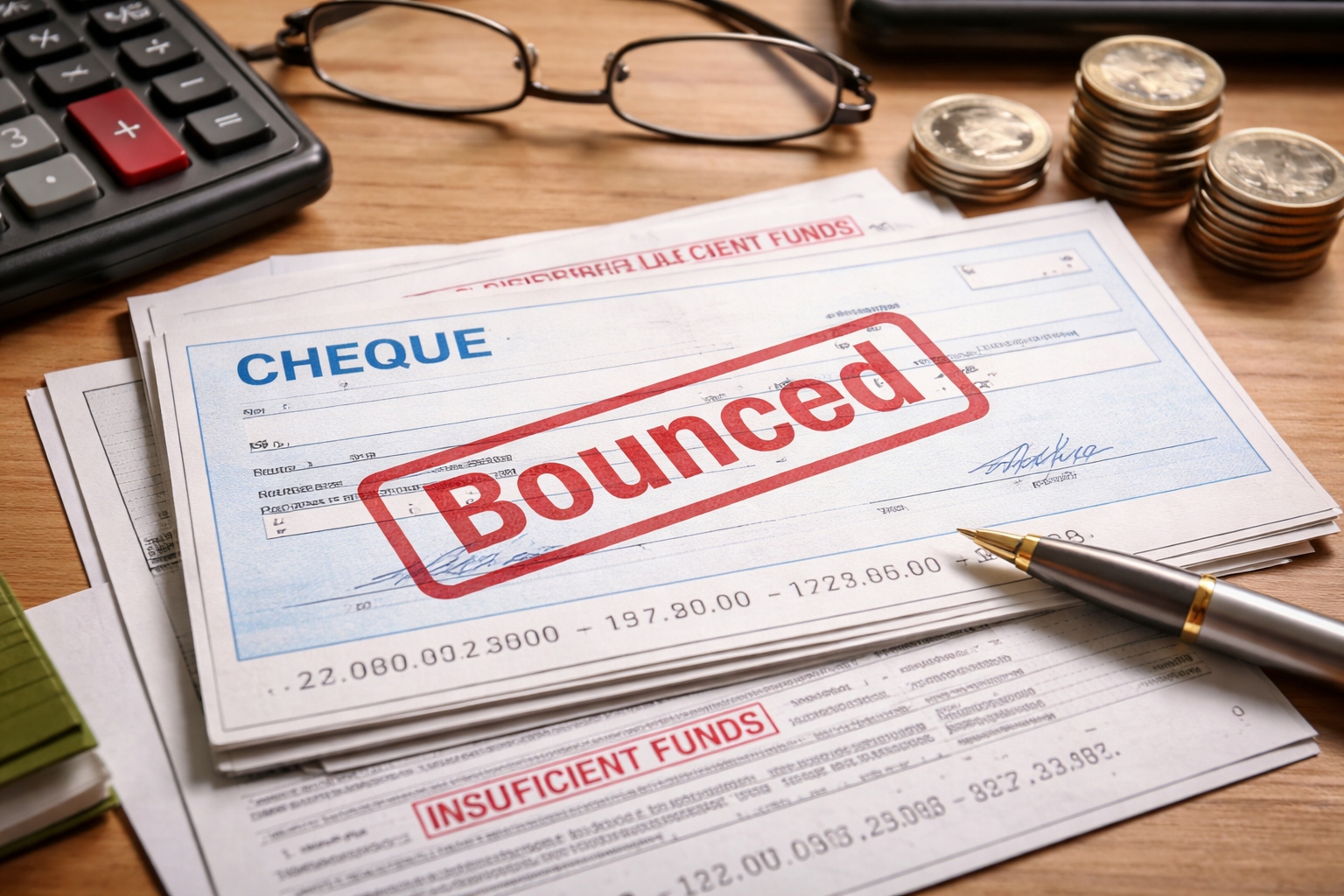
Cheque Bounce Cases:
A cheque bounce occurs when a cheque presented for payment is returned unpaid by the bank due to insufficient funds, a mismatch in signature, or other banking irregularities. In India, such cases are governed under the Negotiable Instruments Act, 1881, making it a criminal offense in addition to a civil liability. Understanding the procedures, penalties, and recovery options is crucial for both individuals and businesses to protect their financial interests.
What is a Cheque Bounce?
A cheque bounce happens when a bank refuses to honor a cheque. Common reasons include:
- Insufficient funds in the drawer’s account
- Signature mismatch
- Altered or damaged cheque
- Stale cheque (beyond 3 months from issuance)
- Account closure or freezing
Cheque bounce cases are more than just a banking inconvenience; they can lead to legal consequences for the issuer.
Legal Framework for Cheque Bounce in India
The Negotiable Instruments Act, 1881, specifically Section 138, deals with cheque dishonor. It states that if a cheque is dishonored due to insufficient funds or exceeding the drawer’s arrangement, the payee can initiate legal proceedings against the issuer. The key elements include:
- Cheque drawn for payment of money
- Cheque presented within 3 months
- Dishonor due to insufficient funds
- Notice to the drawer within 30 days of dishonor
Failure to comply with these requirements can result in dismissal of the case.
Step-by-Step Procedure for Cheque Bounce Cases
Handling a cheque bounce requires following a clear legal procedure:
1. Receive the Cheque and Present it to the Bank
The payee must present the cheque to the bank within the validity period (usually 3 months). The bank will verify the funds and signatures. If the cheque is returned, the bank issues a Cheque Return Memo stating the reason.
2. Send a Legal Notice
Once a cheque bounces, the payee must send a legal notice to the drawer within 30 days of receiving the return memo. The notice should mention:
- The amount of the cheque
- Date of issuance
- Reason for dishonor
- Demand for payment within 15 days
3. Filing a Complaint in Court
If the drawer fails to pay within 15 days of receiving the notice, the payee can file a criminal complaint under Section 138 of the Negotiable Instruments Act in the Magistrate Court. The complaint must include:
- Original cheque
- Cheque return memo
- Copy of the legal notice and proof of delivery
4. Court Proceedings
The court may summon both parties for hearings. The drawer can present defenses such as:
- Cheque issued as a gift
- Dispute over underlying transaction
- Fraud or coercion in issuance
The court evaluates the evidence before delivering its judgment.
Penalties for Cheque Bounce
Cheque bounce is treated as a criminal offense. Under Section 138, penalties can include:
- Imprisonment: Up to 2 years
- Fine: Up to twice the cheque amount
- Both imprisonment and fine
It’s important to note that the payee can also pursue civil recovery through the debt recovery process, separate from the criminal complaint.
Recovery Tips for Cheque Bounce Cases
Recovering dues from a bounced cheque requires a strategic approach:
- Maintain Proper Documentation
Keep a copy of the cheque, bank memo, and all communication with the drawer. Documentation strengthens your case in court. - Send a Conciliatory Notice First
Before approaching the court, attempt amicable settlement by sending a polite reminder. This can save time and legal costs. - Engage a Lawyer Early
An experienced lawyer can help draft the legal notice correctly and file the complaint efficiently. - Consider Alternative Dispute Resolution (ADR)
Mediation or arbitration can help resolve disputes without prolonged litigation. - Act Promptly
Delays in sending notices or filing complaints can lead to dismissal of the case. The law prescribes strict timelines.
Prevention Measures for Cheque Bounce
To avoid cheque bounce, consider these steps:
- Verify funds before issuing a cheque
- Avoid issuing post-dated cheques unless necessary
- Keep cheque books in a secure place
- Reconcile accounts regularly
Businesses can also adopt digital payments to reduce reliance on physical cheques and prevent dishonor.
Conclusion
Cheque bounce cases are not only financially significant but can also have serious legal consequences. Understanding the procedures, penalties, and recovery options ensures that individuals and businesses can protect their interests effectively. Timely action, proper documentation, and professional legal advice are key to navigating cheque bounce disputes successfully.